

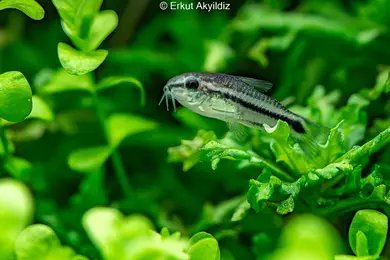
Scientific Name: Gastrodermus Pygmaeus
Common Name: Pygmy Corydoras / Pygmy Cory
Family: Callichthyidae
Origin: Brazil – Rio Madeira basin
Adult Size: Approximately 2.5–3 cm
Temperament: Peaceful and social
Diet: Omnivore
Lifespan: Approximately 3–5 years
The Pygmy Corydoras, previously classified as Corydoras Pyaeus, is now often classified as Gastrodermus Pygmaeus, one of the smallest and most entertaining members of the Corydoras family. Their tiny size, peaceful nature and energetic schooling behaviour make them an excellent choice for planted aquariums, nano setups and peaceful community tanks.
Unlike many larger Corydoras species that spend most of their time on the substrate, Pygmy Corydoras frequently move throughout the lower and middle areas of the aquarium. A group moving together through plants and hardscape creates a fascinating display of constant activity.
These little catfish are naturally social and should be kept in groups. We recommend 6–10 or more, with larger groups generally resulting in more confident and natural behaviour.
A fine-grained or smooth substrate is preferable, allowing them to forage naturally without damaging their delicate barbels. Plants, wood and other natural cover will also help them feel secure.
NatHab Care Guide:
Temperature: 22–27°C
pH: 6.0–7.4
Water Hardness: Soft to moderately hard
Minimum Aquarium: Approximately 40L
Adult Size: 2.5–3 cm
Recommended Group: 6–10+
Tank Level: Bottom to midwater
Breeding: Egg scatterer
Temperament: Peaceful
Feeding:
Pygmy Corydoras are omnivorous and should receive a varied diet. Their small mouths make appropriately sized foods important.
Offer fine sinking pellets, micro granules, crushed quality foods, baby brine shrimp, Daphnia and other suitably sized frozen or live foods.
Despite their reputation as bottom feeders, they should not be expected to survive solely on leftover food. Make sure food reaches the bottom where they can feed comfortably.
Ideal Tankmates:
Their peaceful nature makes them excellent companions for other small community species such as Ember Tetras, small rasboras, Otocinclus and other peaceful nano fish.
They can be kept with shrimp, although very small shrimplets may occasionally be vulnerable to opportunistic feeding.
Why We Love Them
Small enough for nano aquariums but full of personality, Pygmy Corydoras bring movement and character without overwhelming a planted aquascape.
NatHab Tip: Don’t underestimate the difference a proper-sized group makes. Six is a good starting point, but a group of 10+ is where these little Corys really start to shine.
Livestock is supplied subject to availability and size. Fish may vary slightly in size and coloration depending on age and condition.


Reviews
There are no reviews yet.